7 Ways to Make Your Walks More Interesting | Incline & Barefoot Walking
Discover 7 easy ways how to make your walks more interesting, including incline walking, barefoot walking, and simple tips to feel better on every walk and healthy
4/17/20266 min read
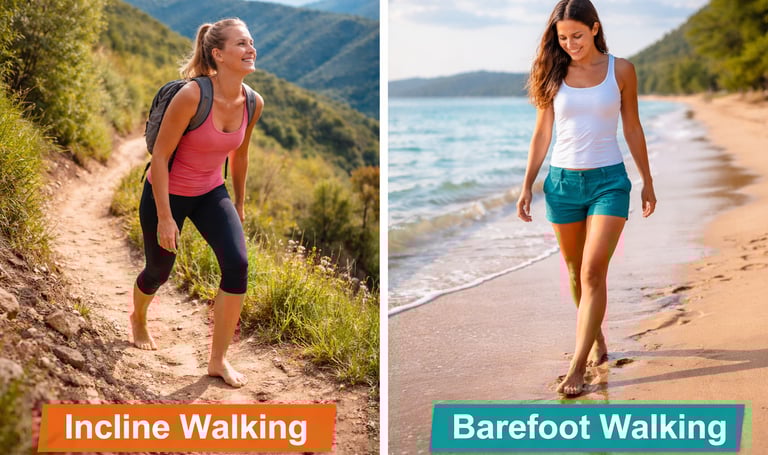
Walking daily but not getting the results you hoped for?
It's okay, a lot of people feel that way. Walking is easy, and most of us can do it. But sometimes, even if we walk a lot, it feels like we're not really getting all the good things that walking can offer.
Just a few small changes can really help a lot. Incline walking and walking barefoot are pretty simple things, but they can really help your body and mind feel better.
They'll also give your body a different kind of workout. These changes like incline walking and barefoot walking do more than burn a few extra calories. Incline walking and barefoot walking work your muscles differently, make your balance better, and also help your mind feel good.
And the greatest thing? You don't need expensive gear or tons of practice. If you tweak your daily walk a little, you'll get more from it and start seeing real changes.
1.Incline Walking:
Incline walking can make your walk feel like a quick workout. Have you ever walked up a hill or on a treadmill that's tilted upwards? We call that incline walking, and it really changes everything.
When you do incline walking, your glutes, hamstrings, and calves have to put in more effort. This helps strengthen your lower body, and you still get to enjoy a nice walk.
According to sports medicine research, when you do incline walking, your heart works harder and you use more oxygen than when you walk on a flat surface.
Basically, your heart and blood vessels work harder even though you're not walking any faster.
Here's why you might want to give incline walking a shot:
You can burn extra calories with incline walking even if you aren't sprinting or running.
Work on your legs and butt, it'll help you move around more easily.
Get your heart and lungs in better shape
Incline walking helps you have better balance and coordination, so you're less likely to fall.
Even a slight uphill walk with incline walking, whether on a treadmill or outside, can make your regular stroll feel more like a workout.
With time, you'll start to feel your muscles get stronger and your stamina improve. Some people are really surprised by how well incline walking works once they do it regularly.
2.Barefoot Walking:
Another method of walking you haven't heard about: walking in barefoot
Yeah, no shoes. It seems weird at first, but it works like magic.
Walking with shoes on would limit the motions and make the muscles and tendons weak after some time.
When you walk without shoes, your muscles, bones, tendons, and ligaments work a lot and make them stronger.
Benefits of barefoot walking:
Strong muscles will give you a good balance
You’ll feel the ground well while walking.
Most importantly, start slowly,
Start walking for 10 to 15 minutes and increase gradually.
Important note:
Always talk to your doctor before walking barefoot if you have diabetes or any other foot problems to avoid any infections and injuries.
3.Combined walking: incline walking+ barefoot walking
Let's talk about Incline walking and barefoot walking.
Sometimes I do both: mixing with incline walking and barefoot walking.
Most of the time, I enjoy walking barefoot, but only on safe and clean surfaces like grass, sand and tiles at home. I do incline walking up hills barefoot when I feel that area is safe to walk to have a better grip and balance.
It will make your midsection stronger and have better balance. You’ll not feel bored and you'll start enjoying it eventually.
4. Japanese Interval Walking:
Another method with incline walking and barefoot walking, there is Japanese interval walking, how will you incorporate it?
Brisk Walking, Then Slow Down, Then Do It Again
Have you ever tried interval walking?
People in Japan found this way of walking as 3 minutes of brisk walking and another 3 minutes of slow walking work effectively.
This is a kind of tough workout yet easier for the body.
Here's how it works:
A brisk three-minute walk. Walk slowly for about three minutes
Do that five more times.
Incline walking and barefoot walking can also be done with this method.
Here's what you receive:
Improved heart health
Stronger legs
Stabilize blood pressure
Uses more oxygen and keeps the lungs healthy.
5. The 12-3-30 Walking Method:
This is one of the favorite methods of walking that people are talking about on social media.
It was introduced by fitness influencer Lauren Giraldo.
It's really straightforward and works well like incline walking.
You should set the treadmill incline to 12%, 3 miles per hour when walking, then take a 30-minute walk.
It's just like a planned incline walking.
You will get strong legs and burn more calories than walking on a regular flat surface.
Possible Good Things are:
You'll burn more calories
Your butt, calves, and hamstrings get more toned.
Improves heart rate and lung capacity
Kind reminder, if you are a beginner of incline walking, start walking on a slope and then gradually increase to steeper surfaces. Be easy on your legs.
6. Nordic Walking:
This is a kind of regular way of walking, but you will use poles like skiers from Finland. Pro skiers from cross-country use poles while skiing.
This way of walking involves your upper body, not only legs.
Although it looks funny but people around the world enjoy it as a fitness activity.
Benefits of Nordic Walking:
20- 40 more calories will be burned than normal walking.
Great workout for your upper body and helps the body to stand straight.
Low strains on your joints.
People often do incline walking or barefoot walking before or after Nordic walking.
7. Backward Walking (Retro Walking):
Going in reverse Walking backward might feel a bit strange when you first try it, but it actually works really well.
You might have paid less attention, but reverse walking will stabilize your body balance.
Reasons to try:
Your quads will be built up.
Your body starts to move steadily
Burns more calories.
Take it easy if you are just starting.
Try practicing somewhere open and safe, like a park or on a treadmill with handrails. It's a good way to switch things up and challenge your body in new ways. Walk to calm down.
Mindful Walking:
It is a way of walking while you pay attention to what's going on in your mind.
Don't worry about how fast or far you're going.
Just pay attention to your breathing, how each step feels, and everything you see and hear around you.
Here's an idea:
Pay attention to what each step feels like under your feet.
Just breathe steadily.
Listen to what's going on around you.
Sit up straight and stand tall.
Walking mindfully has been shown to lower stress, ease anxiety, and make your mind clearer.
Pro tip: If you do this outside, surrounded by nature, it can make you feel even calmer. You can do incline walking mindfully by barefoot walking peacefully.
Case Study: Real-life scenario for incline walking and barefoot walking
Here's a look at what actually happened when people tried incline walking and barefoot walking.
Neha, a housewife, was trying to reduce weight due to her underlying health issues, walking around for 30 minutes every day without fail. But she didn't see any noticeable changes.
Later she learnt about incline walking and barefoot walking, tried walking on treadmills and sometimes on an actual hill, without shoes for few times a week.
She worked out incline walking on treadmill and barefoot on safe surfaces like grass and tiles.
Results will amaze you: after 10 weeks of doing incline walking and barefoot walking, she reduced 2 kgs of weight and burned more calories than her usual walking method.
Things We've Learned:
Incline walking, even for a short bit, can make a big difference.
Barefoot walking helps make your feet stronger, especially the muscles you don't use much in shoes.
Mixing things(inclined walking and barefoot walking) up makes walking more fun and keeps you motivated.
Taking things one step at a time helps you avoid getting hurt and lets your body get used to new things.
What are your takeaways?
If you start incline walking , or barefoot walking, or in short bursts, or just pay more attention as you walk, you'll actually make each step count for more.
Incline walking and barefoot walking changes work out different muscles, help you last longer, and can even make you feel better mentally.
Even a short 30 minutes a day of incline walking and barefoot walking can really help you get stronger, build up your stamina, and clear your head. So, put on your shoes, or don't, and just start.
You'll feel much better, both physically and mentally.